/home/qiocp3sxg2b3/public_html/app.comeback2.host/wp-content/mu-plugins Pet Sitter Best Practices – Page 3 – Association of Pet Professionals

Category: Pet Sitter Best Practices

  • A Dog’s New Year Resolution List

    A Dog’s New Year Resolution List

    How to celebrate New Year with a dog     As we consider our goals for the New Year, those inner-most visions for positive change and renewed health and vitality, take a minute to consider what a dog might want in 2023. Rounding the corner toward a new year, and in preparation to service our pet parents and clients, let’s have some fun with what a dog’s “Resolution List” might look like.

    You might find a way to incorporate these ideas into your early marketing campaign for 2023. 

    A Dog’s New Year Resolution List might look something like this:

    (1). Take me for daily walks.  I adore the outdoors and opportunity to use my superpower sense of smell to “process” the world. It gives me great pleasure to diagnose the scents around the ground. Please don’t pull me along because you’re in a hurry.  Let me stop and sniff the bushes, light poles and fire hydrants that command my nosy attention. It may be the only activity for me today, so let’s make it count.

    (2). If we can’t go for a walk, can we play an indoor game instead? I like spending time with you, so let’s play hide and seek, toss some balls or squeaky toys around or teach me a new trick.

    New toys, entertainment puzzles or a treat-stuffed Kong will help keep me occupied when you’re not home and I’m alone.

    I would love it if I could go with you when you run errands.  I can’t stay in the car alone, but I hear Home Depot and many other dog-friendly stores open their doors to 4-legged patrons, so let me join you on those jaunts.

    Pet Pro tip: if you’re not offering “field trips” as a special service to your clients, consider adding something like this to your menu for variety.

    (3). If you notice that I have bad breath, I may need a teeth cleaning. Hard chew bones might help detract the plaque and keep me gleefully occupied but brushing my teeth daily will help keep my canines clean and avoid losing them later in my life.

    (4). I don’t like going to the doctor’s office any more than you do yet monitoring my health with annual (or semi-annual) well exams should be on our calendar this year, especially if I’m 5 or older.  I’m aging faster than you are, so periodic check-ups, not just routine vaccinations, will allow me to enjoy your company longer if something exists that needs preemptive attention.

    Pet Pro tip: ask your clients when their dog’s last well exam occurred.  You’d be surprised how many pet owners do not schedule well visits.

    (5). Please keep my coat clean and debris free.  Mats are uncomfortable and over-grown toenails make it harder for me to walk.  When you brush me, it’s like a massage!  Let’s do that often.

    (6). Make sure I have proper identification. I might discover accidental outdoor freedom and don’t want to get lost and not find my way home to you.

    (7). I appreciate that you let me sleep indoors and have provided a soft bed to call my own (sometimes in yours!). If you must travel without me, please choose a cage-free dog boarding option or send a pet sitter to ours. I want to sleep in the comfort of my own bed and not in an isolated kennel or cage that I’m unfamiliar with.

    (8). I need routine!  If something is upsetting you, I will comfort you.  If we both get caught up in a life-changing moment, please remember that I need to be comforted to.

    (9). Please feed me the highest quality dog food you can afford.  I appreciate that budget is a concern, yet that big feed bag with mystery ingredients isn’t the best buy for my long-term health. As I mature, I need dietary changes to coincide with my growing and changing needs.  I’ll do my best to enjoy the same food every day, yet variety is the spice of life (so I’ve heard).

    (10). If you rescued me, please know that I am truly grateful.  I may need some time to get past my past hurt.  Be patient and know that I want to attach again.  Do not detach from me during this transitional period nor give up on me, as others might have done before you and I met.

    You are a valued partner in maintaining pet health, vitality and emotional comfort.

    Our human-animal bond is not only reciprocal in love and adoration, yet one of the best relationships we can have in its most simplistic form. Dogs are authentic and without pretense. To quote Josh Billings: “A dog is the only thing on earth that loves you more than he loves himself.”

    Resolve to make each day the best it can be for you and them. Oh, by the way…if you haven’t joined as a member yet, put us on your New Year’s Resolution list.  We’re here to help you go and grow! Follow this link to sign up: http://app.comeback2.host/join-us/

    Hugs,

    Your Pet Pro Team @ AoPP

  • Holiday safety tips for professional Pet Care

    Holiday safety tips for professional Pet Care

    pet sitter safety tips at Christmas


    The holiday season marks the end of the year and fresh beginnings, with all the joys of gift giving and festive, family celebrations. Pets are family too and should also benefit by the added gaiety of the holiday spirit. As you and your clients prepare for the holidays, keep in mind that not all decorations or holiday sweets are pet friendly. As you deck the halls, please keep these safety tips in mind:

    Oh Christmas Tree:

    A Christmas tree should be properly anchored so it doesn’t tip over, especially when nosy noses notice something new in the room.

    Cats especially like to climb trees. Cats are good climbers. It’s not only in their ancestry, but their extendable claws give them a really good grip on tree trunks!

    With natural trees, the tree water needs to be kept clean. Oils produced by fir trees can cause irritation to a pet’s stomach. Tree needles would not digest well either with possible obstruction or punctures if consumed.

    Small, breakable ornaments should be at the top of a tree. Best to consider ornaments with tie string vs hooks…broken ornaments are a common occurrence and shards and hooks on the floor can be hazardous to puppy’s paws. Only turn tree lights on when you are home. Take the same precaution with lit candles.

    Be careful about tree lights, as they can cause electric shock or burns if chewed on, particularly if you there’s a puppy in the house where chewing is a natural process as they teethe and explore their world in a “taste and test” fashion. Flocked trees could be toxic if the branches become Fido’s new chew stick. Keep presents stored offsite as long as possible (so they aren’t opened early by curious canines and felines).

    Holiday Treats:

    Yummy chocolates and Christmas confections magically multiply during the holidays. Sugary sweets and chocolate are not meant for sharing with pets, however inadvertently.  Xylitol, used as a sugar substitute, may also be found in some brands of peanut butter, yogurt, toothpaste and chewing gum and is extremely dangerous to dogs. Symptoms of xylitol poisoning include vomiting, muscle weakness, difficulty walking and tremors – and they usually begin within 15-30 minutes of consumption.

    Dog-Safe Toys:

    Some dogs like to “attack their prey” (they can’t help their ancestral disposition), so be sure to monitor dog toys with small parts or squeaky inserts. Unless a dog is a soft gummer, stick with sturdier chew toys, such as Nyla bones, Bully Sticks or Kongs. Most of us have witnessed the destruction of plush toys after a rigorous round of “seek and destroy”. The plush toy always loses!

    Toxic Holiday Plants:


    HollyMistletoeLilies, Daffodils and Amaryllis are potential GI upsets waiting to happen, if ingested. If you these natural plants are in the home make sure they are out of nose reach.  According to Pet Poison Hotline https://www.petpoisonhelpline.com/ “Though they have a bad rap, Poinsettia plants are only mildly toxic to cats and dogs. While poinsettias are commonly “hyped” as poisonous plants, they rarely are, and the poisoning is greatly exaggerated. When ingested, mild signs of vomiting, drooling, or rarely, diarrhea may be seen.”

    Despite this reassurance, some Poinsettia plants may have been treated with pesticides so best to avoid having any of these plants in close contact with household pets.

    New Year’s Noises:

    Loud noises, firecrackers and party horns are fun for us, yet may cause anxiety for some dogs. So much so, they may attempt to escape. If a dog is prone to anxiousness, place him in a quiet room during the countdown to 2023. Include treats, puzzle toys and calming music on the radio or TV.

    For extreme anxiety-prone dogs, consider calming chews or vet-prescribed medications.  CBD for pets is gaining popularity as a treatment alternative for a myriad of ailments including anxiety.

    Enjoy the festivities of the season and relish in your 2022 accomplishments. Whatever your New Year resolutions might be, know that you have done your best to deliver professional pet sitting all year.

    Warm wishes for peace, love and joy always.

    Hugs,

    Your Pet Pro team


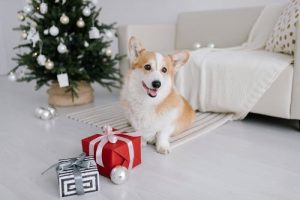
    photo attribution of Corgi around presents photo: Julia Volk on pexels

  • Consolation Tips when a Pet Passes

    Consolation Tips when a Pet Passes

    The loss of a pet is one of the hardest days in a pet owner’s life. As dedicated pet sitters, we share their grief as we treat our furry clients like our own and play an important role in their lives.

    A sympathy card or hand-written note is an effective way to show your clients how much you care about them. Depending on your relationship, memorial gifts or special gestures may be extended.

    Most pet owners will eventually add another companion animal to the family, so it’s important to stay in touch and be especially present during this difficult time.

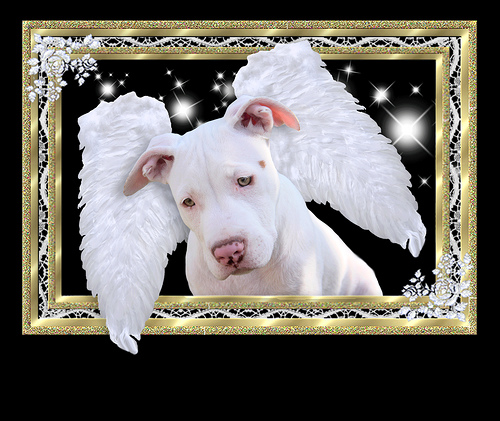
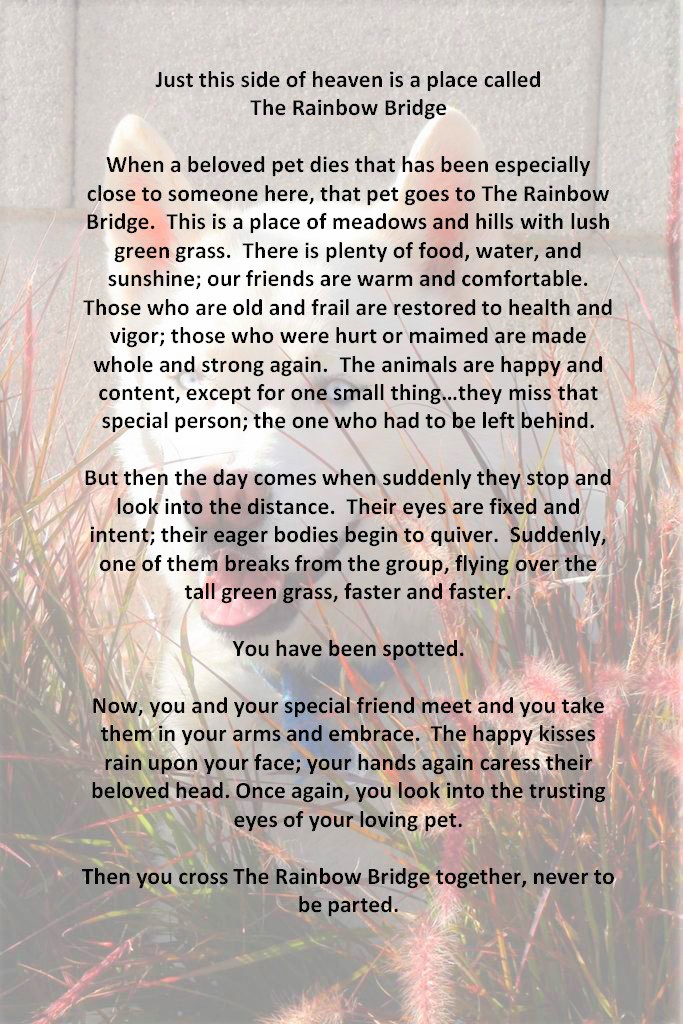
    THE RAINBOW BRIDGE POEM

    The rainbow bridge is a special, mythical bridge between Heaven and Earth. When a pet passes, he or she crosses this magical bridge. If you’re not familiar with this poem, read it below. The common phrase “my pet has crossed the bridge” is in reference to this poetic message.

    Many pet owners believe that their beloved pets that have passed are waiting for them at the bridge.

    This poem is a heartfelt way to express sympathy to your clients suffering the loss of a beloved pet. Include the poem in a hand-written sympathy card to show how much you care and how much you will miss their pet also.

    Poem for pet passing

    FORGET-ME-NOT FLOWER SEEDS

    Another special expression of sympathy is to send a condolence card with a packet of these specific flower seeds as an insert.  This flower is a poignant symbol of remembrance during partings or after death.

    PHOTO OF THEIR PET

    You undoubtedly have many photos of the dogs and cats you care for. Printing a photo of them and including it in a sympathy card is another special way to express your compassion. PET PRO TIP: For a professional look, go to Walgreens or CVS for a high-quality print. Walgreens offers 4×6 photo magnets and other inexpensive items you can have imprinted.

     SIMPLE MESSAGES THAT SAY A LOT

    • “I will always remember (dog/cat’s name) and he/she will live in our hearts forever”.
    • “My thoughts and prayers are with you at this difficult time. I’m shedding tears too!”
    • “Wishing you peace and comfort in the days ahead”.
    • “I’m so sorry for the loss of your sweet (dog/cat’s name). He/she was a much-loved member of your family and mine”.

    People will remember how much you cared by your gestures of solace and the pet pro you are!

    Hugs,

    Your Pet Pro Team @ AoPP

    If you’d like a JPG of the Rainbow Bridge poem sent to you, please email us to request a downloadable copy @ info@app.comeback2.host. 

    To become a Member, visit the JOIN US page and link with us for more tips and resources @ http://app.comeback2.host/join-us/


  • Pet Sitting Reaps Pawsitive Job Benefits

    Pet Sitting Reaps Pawsitive Job Benefits

    Inflation is walloping our wallets and to offset the rising cost of consumer goods and gas, rent and household expenses, folks are looking for extra money-making opportunities to stem the tide.

    Inflation can be a dream killer for retirees and those on fixed incomes. Families are working harder to make the house payment and keep food on the table. For those fortunate to have a savings account, 401k or other assets those statement balances are akin to a bad dream as values erode with tsunamic ferocity.

    Fortunately, we live in a gig economy which allows for part-time or “when-I-want-to work” opportunities in many sectors that don’t require a lot of capital investment or management experience.

    A great build-back-my-nest-egg job that doesn’t require much dough to launch is PET SITTING. The average pet sitter works from home, visiting dogs and cats on their turf.  Suit and tie not needed nor recommended!

    Pet sitting is rewarding

    According to Veterinarians.org, “over 50% of U.S. households own a dog” (63.4 million houses = 89.7 million dogs) followed by cats and they need to be cared for when the owners are away.

    As a successful loan officer for 30 years, I found myself in a similar economic panic in 2008. The real estate market had crashed big time and I was adrift with serious concerns about my financial viability and future career path.

    Serendipitously at the same time, I was caring for two dogs that belonged to a friend.  I had two of my own, so with 4 dogs camping out in my home, I took stock and realized “this is fun, I should charge for this”!  Before I knew it, I had 10 dogs per day hanging out with me and my then 10-year-old son. He and his friends were my assistant dog walkers. Word spread quickly that devoted dog owners could park their pups in my home, cage-free with tender loving care and a host of Boy Scouts to walk them.

    pet sitting is fun

    Fast forward, I am the proud owner and concierge of a thriving pet care business in the greater Phoenix area.  We have expanded to a team of 40+ pet sitters with various pet services on the menu.  We are truly nannies to the furry children in the family and having a ball. We are Mary Puppins and more!

    There’s nothing sexy about scooping up dog litter, nor running around town with dog hair and slobber on your pants and shoulders.  Yet, there is a magnetic vibe that only dogs can provide. Studies have shown that a dog’s presence lowers our cortisol levels and heightens our oxytocin release (that “feel good” hormone). It’s a win-win.

    New-to-the-game pet sitters don’t have to hire staff or form an LLC to enjoy the fruits of pet sitting on the side. Starting small with daily dog walks and cat visits could be a good segue to extra lunch money and an easy way to discover how fulfilling it can be. It may help stem the tide in this tumultuous economy and surprise you in ways you haven’t thought of.

    Dogs and (some) cats are just happy to have your loving paws on them when their owners are away for the day or longer.  They don’t care what you look like nor what your skill sets include. If you love animals, have owned pets in the past, currently own a pet, raised children (or still have them in the home), want to control your schedule and supplement your income, pet sitting can be an engaging side job if you take it seriously.

    how to be a dog sitter

    For helpful resources to help you learn more about the art of pet sitting, take a deep dive into our website. The “meat” of our website is in the Members Only Section.…JOIN US HERE @ http://app.comeback2.host/join-us/ You won’t be sorry! 🙂

    You are also invited to direct your questions by email to @info@app.comeback2.host.

    About the Author: Tori Levitt is the Owner & Concierge of Doolittle’s Doghouse, serving pet owners in the greater Phoenix and surrounding cities.  She is also the founder of this new trade association, The Association of Pet Professionals; a member-based platform for pet sitters to grow in their professional journey.  She authored a humorous book that peeks inside pet sitting and the amazing revelations about dogs in “The World According to Dog; Amusing Life Lessons Taught to Us by Dogs”, on Amazon. 

    www.doolittlesdoghouse.com

    http://app.comeback2.host/join-us/

    https://www.amazon.com/World-According-Dog-Amusing-Lessons/dp/1790977568/

    Resources:

    5 Ways Dogs Help Humans Be Healthier and Happier – American Kennel Club (akc.org)

    Pet Ownership Statistics (veterinarians.org)


  • Pet Sitter Tips for Fall Weather Changes

    Pet Sitter Tips for Fall Weather Changes


    pet sitter care practices

    Following a hot, dry summer, the beginning of fall is more than welcome!  As you prepare for seasonal changes, keep the following in mind to ensure safe pet care for you and your clients.

    Colder weather has many effects on pets. They need to eat more to regulate body heat and offset what is (hopefully) increased exercise as pet owners and pet sitters are able to get out more.

    Cold, wet weather aggravates arthritis, common in overweight and senior dogs. If you notice stiffness, limping or lack of interest in exercise with client’s pets, suggest they add joint supplements to their dog’s diet.

    Pet Pro tip:  research affiliate marketing as an add-on to your service menu. It helps if you have a website for product (and service) promotion. We have an awesome Specialty Partner to help you with website creation with a special offer (for members only) @ http://app.comeback2.host/join-us/

    Other Fall Weather concerns for pet sitters to be mindful of include the fact that snakes begin their hibernation in winter and may be particularly crabby if encountered.  Rats and mice are also looking for shelter from the cold.

    If you live in an area prone to rats, especially around citrus trees, be careful about rat poison.  If a dog or cat were to ingest rodenticide, it can be life-threatening. Be extra vigilant when walking dogs or entering client’s homes and yards where rat baits may be located.

    When walking dogs, avoid allowing them to romp and sniff in piles of leaves. Leaves harbor mold and bacteria when wet. Those microorganisms, if ingested, can cause vomiting, diarrhea, or loss of appetite.

    Other forms of unwanted organisms include mushrooms.  While more prevalent this time of year, most are harmless.  A small percentage, however, can be toxic if ingested. Unless you are a mycologist, best to simply avoid all mushrooms. Just keep an eye on the fungi!

     With shorter daylight hours, consider walking dogs with reflective lighting.  Always walk them on a leash (harness is better) to ensure control.  A dog in flight at night may not be seen as well by passing motorists.

    Lastly, short-coated dogs get colder so may benefit by outer wear. (Another Pet Pro tip for affiliate marketing ideas)! 

    As always, have fun, be safe and hugs,

    Your Pet Pro Team @ AoPP


  • What’s that smell? To a dog – EVERYTHING!

    What’s that smell? To a dog – EVERYTHING!


    Dogs love to sniff while walking


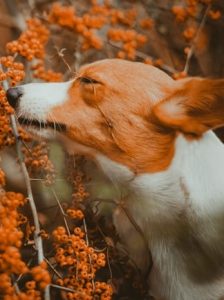
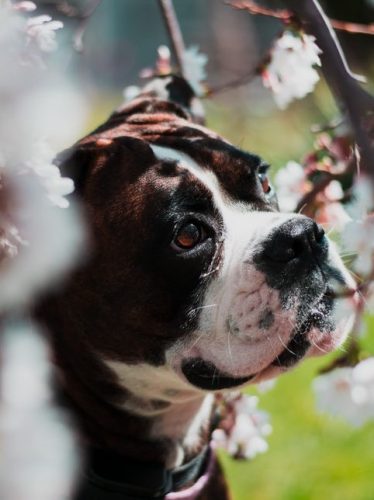
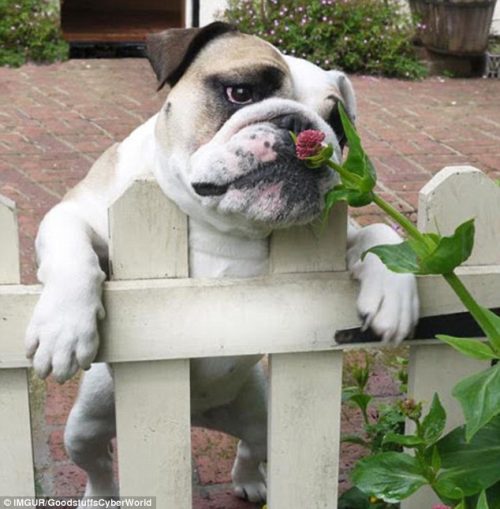
    Flowering plants and verdant bushes are nature’s “perfume” and an invitation to take a walk with your dog and furry clients.

    As dog lovers and professional pet sitters, we know the importance of daily exercise for all dogs. Not only is a walk an opportunity for dogs to relieve themselves, but more importantly, it’s mentally stimulating for them to absorb all those enticing smells. When outside of their home, dogs are able to smell other dog’s “litter” and send signals to each other in the process.

    With close to 300 million olfactory scent receptors in their noses, dogs can tell if the other dog is male or female, sick, or in heat. Male dogs especially will add their deposit to the community “puddle” and lift their back leg high enough to ensure it’s at the next dog’s nose level. Often, they will scratch the ground to further spread their personal scent, its group email!

    Dogs don’t have to be specially trained for scent work to employ this natural talent. All dogs follow their nose with superior assessment abilities. Rather than rushing through the walk, stop and smell the roses together.

    Why is this important, especially if you are in a hurry to get to the next client or be home in time to cook dinner for hungry humans? Dogs find odors desirable. 

    This includes smelly socks and shoes, armpits, mouth odor (good or bad) and other familiar smells that we emit every day. Sanitized odors are less desirable, including the sterilized smells in a veterinarian clinic.

    Every walk should be a “sniffari” for dogs. Make each moment count!

    Hugs,

    Your AoPP team


  • Covid’s Impact on Pet Health

    Covid’s Impact on Pet Health

    As we unpack the past 2 years, the requirement to embrace change became necessary during unprecedented upheaval. We found creative ways to entertain ourselves indoors and learned to Zoom. We’ve emerged from the Covid cocoon, yet what about our pets?

    Dogs born and/or acquired in 2020 were kept in isolation too. Robbed of the opportunity to socialize with other dogs and experience a routine away from their owners, they may suffer acute separation anxiety and fear of new events. Both dogs and cats were living La Dolce Vita with 24/7 attention and may be experiencing signs of anxiousness and anxiety as their owners return to offices, travel and spend longer periods away from them.

    According to Stacy Liberatore for DailyMail.com in an article published last June, researchers at Auburn University discovered that: “pandemic puppies” are fearful during encounters with other dogs and humans because they spent so much of their early lives cooped up inside” and are prone to panic in unfamiliar environments. https://www.dailymail.co.uk/sciencetech/article-9694389/Pandemic-puppies-adopted-COVID-19-lockdowns-face-behavior-challenges.html

    As early socialization is critically important in the first 3 months of a young pup’s life, learning to bond and socially communicate with other dogs and people helps them develop their coping skills and confidence.

    Perhaps you’ve seen signs of client’s pets’ anxiety such as whining or increased barking, excessive licking or shaking, indoor destruction or never-done-before accidents, lack of appetite or refusing treats. Cats may also show these same signs in addition to suddenly ignoring the litter box, attempting to hide or escape, or pouring on more affection than usual.

    Clients may need to begin a period of “desensitization” by leaving their dogs or cats alone for a spell. Starting with short absences and gradually increasing the time they are gone. Sessions should be kept short while avoiding the impulse to make it a big deal when they leave or return.

    With patience, a pet will learn to adapt. Devotional practice is required as it may take a few weeks to months to reestablish that pet’s confidence during owner absences from home. First, determine the threshold of time it takes before the pet panics.  Increase their time alone until they are comfortable from minutes to hours. Vary the time of day for these practice sessions.

    Make sure that before anyone leaves the house, positive rewards are provided so they have a different focus about the exit. Give them a high value treat so they associate something yummy with the departure. Leaving entertainment toys or a stuffed Kong to keep them occupied while the house is empty is a good distraction. For cats, introduce a new toy or bring out their favorite one only during those “vacant” hours.

    Of course, continued exercise and mental stimulation should be routine for dogs and cats. Staying cooped up in the home, with or without human interaction, can promote anxiety. Going for regular walks, play time, training activities and lots of physical affection are especially important for their mental health.  This is where a professional pet sitter shines when providing daily walks or fur babysitting services.

    Advertising and social media messages should focus on these key elements to promote your valuable services. Fur babysitting services for a few hours in the client’s home is a business opportunity for pet sitters.  Offering pet entertainment (a longer timeframe than routine walks or visits to clean the litterbox and fill the food bowl) is worth consideration based on your client base and how many “Covid” pets you can uncover.

    NOTE: If these counter-conditioning methods aren’t working, it’s possible the pet may have a medical condition that requires a veterinarian’s analysis.  If all else fails, some pets may benefit from calming aids (subject to the family vet’s interface in this regard).

    As we adapt to change, dogs and cats can also adjust and be just as happy with careful guidance on your part.

    Hugs,

    Your AoPP Pet Pro Team


  • Gratitude in Business: The Importance of Thanking Clients

    Gratitude in Business: The Importance of Thanking Clients


    Whether you’re working independently or managing a team of sitters, it’s important to thank your clients -the diesel fuel for your business!


    Easy ways to express your gratitude for include: a personal email, hand-written note by mail, newsletters or social media posts expressing your thanks. Simple phrases include:

    • “It was a pleasure caring for (pet’s name).  We hope to hear from you again, when your plans require my/our unique pet care services”.
    • “It is a pleasure each day that we are able to care for (pet’s name). We look forward to a long-lasting relationship with you and your furry family.”

    Ideally, you have a website that captures email addresses via a “lead generation” technique on your site.  If not, you can organically grow an email list by asking your clients to be included in your email campaigns and store those emails in a contact program, such as Mailchimp https://mailchimp.com/ or Constant Contact https://www.constantcontact.com/.

    This simple sentence can be added to your client follow-up: May I/we add you to our monthly newsletters in order to keep in touch?” Pet Pro Tip: Mailchimp is free up to 2,000 emails.

    NOTE: The CAN-SPAM Act prohibits unsolicited electronic (email) messages, so always obtain permission before you send marketing-oriented emails to clients. A host of dos and don’ts govern these business practices as detailed @ https://www.ftc.gov/tips-advice/business-center/guidance/can-spam-act-compliance-guide-business.

    As you grow your list, this is an efficient and effective way to routinely stay in front of your clients at little cost to you.

    Other Inexpensive and Stand-Out ways to Thank your Clients:

    Pet sitter Thank you idea for clients


    (1). A small bouquet of flowers left in the home. Buy a cheap vase at Goodwill or a Dollar Store and consider Sunflowers (due to the size of their blooms, you only need a few to make an impression). Estimated cost: $6.00. 

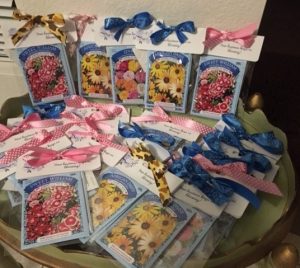
    (2). Flower seeds in a bag-with-bow. This is a seasonally appropriate way to send your client’s a special thank you for very little cost. Using Avery Bag Toppers (template #22801) and flower seeds, insert one or two packets of seeds in the bag and seal with your printed message.

    Use a paper punch to cut a hole at the top to insert ribbon or jute for a bow. You can find the template to create your special message at Avery.com.

    Use A9 Greeting Card envelopes for the right fit as you add your client’s address and send! Our message:                                                                                      “Your business keeps us blooming!”

    Estimated cost for 40 bags including postage: $2.48 each:

    • Avery labels #22801 (includes 40 bags & toppers): $19.00.
    • 1 roll of Jute Ribbon (9.5 mn x 5.4 m): $4.00
    • Seeds: 22 Garden Variety pack @ Walmart.com: $14.99 + tax
    • Book of Stamps (20 to a book): $11.60
    • A9 Greeting Card envelopes: $23.00 (100 count)

    Pet sitter Thank you idea for clients

    You can alternate with other bag inserts and messages also.  Ex: tea bags with the message: “Thank you for being a tea-riffic client!” or a small bag of nuts with the message: “We’re nuts about you!” These bulkier items can be hand delivered to avoid the cost of added postage.

    (3). Have a friend or staff member take a video of you (and/or staff) where you personally express a gratitude message: “Sending good thoughts and thanks. Have a happy day!” Pet Pro tip: Keep the video to less than 2 minutes. Don’t glam up for the “shoot”. (Dog or cat hair on your clothes keeps it authentic)!

    There are many ways to thank your clients.  Get creative and incorporate special thank you messages throughout the year. Every client counts! For additional inspiration, read this great list of gratitude messages @ https://hipinvites.com/thank-you-messages/

    Thank you for your dedication to the pet-sitting profession and all you do to pamper other people’s pets! It’s a life well lived with a lotta love!

    JOIN US for oodles of marketing tips, including our list of original, not-seen-before slogans you can use to brand your business (and so much more) @ http://app.comeback2.host/join-us/

    Hugs,

    Your Pet Pro Team @ AoPP


  • Mastering Crate Training: Fundamentals for a Happy, Well-Behaved Dog

    Mastering Crate Training: Fundamentals for a Happy, Well-Behaved Dog

    Crate training is a common practice and can be very helpful for dog owners and their pets when used in the right circumstances.

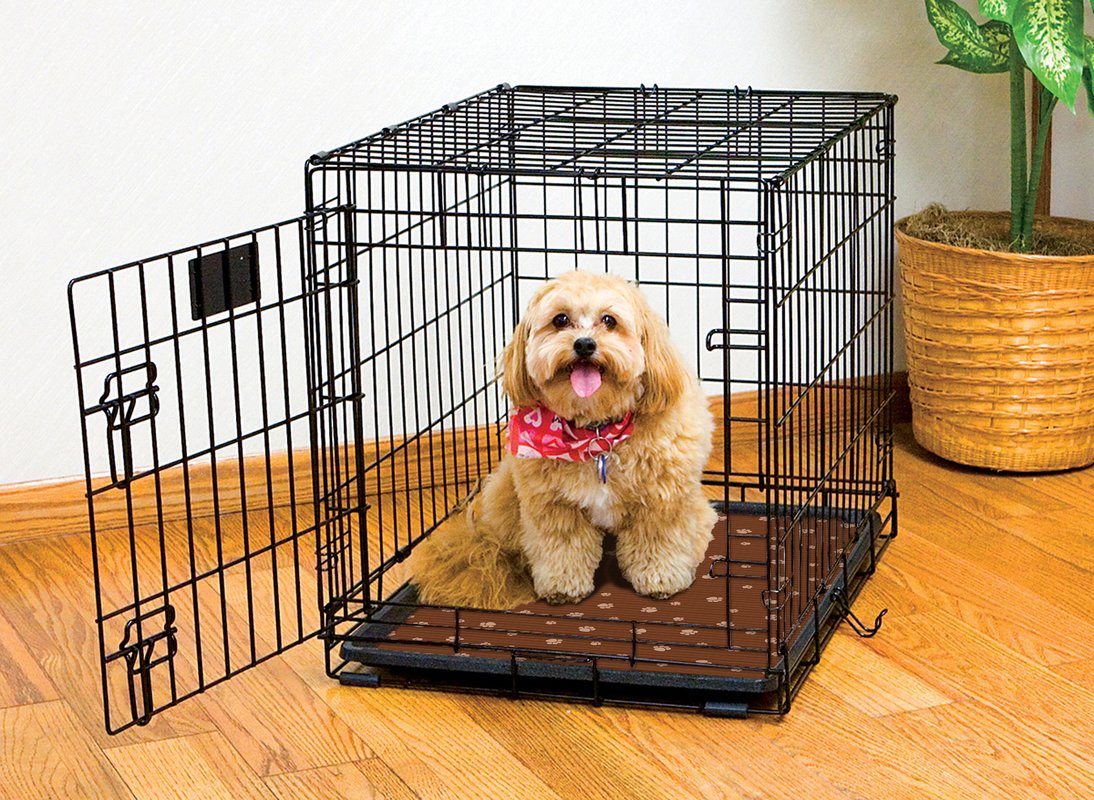
    Crates are often used when potty training a puppy or when owners are away from the home for extended periods. The crate is strictly a management tool to minimize accidents, destructive chewing, post-surgery safeguards or when flying or driving long distances with your dog. No dog should be crated for long periods of time. A generally accepted rule of thumb is for puppies no more than 2 hours and for mature dogs, no more than 4.

    While some dogs will view their crate as a “safe spot” to rest or retreat, it is not always their “den of zen” as we might like to believe. You are fundamentally caging your dogs, regardless of their age or disposition.

    WHEN IT’S TIME TO “GRADUATE” TO MORE SPACE

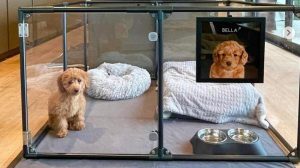
    While crate training is helpful in puppyhood, as your dog learns to “signal” bathroom needs and stops inappropriately chewing things, designing a larger and entertaining play space in the home should be incorporated. Using X-pens or baby gates, section off an area of your home for your dog to comfortably move about along with a few entertainment toys, water, a cuddle bed, slip-proof mats (for hardwood or tiled floors), and preferably near a TV or radio so they can listen to soft, calming music. You can include his crate, with the door left open, in a corner of his play space.

    Adding a Furbo or Petcube Camera to both view and communicate with your dog while you’re away may give both of you added peace of mind. Consider a Bark Potty or Doggie Lawn indoor “potty box” in case you can’t get home in time for proper outdoor relief.

    We love the indoor play pen spaces designed by Clearly Loved Pets for their translucent designs and comfort for both dogs and other small animals @ https://clearlylovedpets.com/

    Clearly Loved Pet Play Pen

    Helpful advice from the Humane Society of the United States:

    “A crate is not a magical solution to common canine behavior. If not used correctly, a dog can feel trapped and frustrated. Never use the crate as a punishment. Your dog will come to fear it and refuse to enter.

    Don’t leave your dog in the crate too long. A dog who’s crated all day and night doesn’t get enough exercise or human interaction and can become depressed or anxious. You may have to change your schedule, hire a pet sitter or take your dog to a daycare facility to reduce the amount of time they spend in their crate each day.

    Crate your dog until they are able to be alone in the house without accidents or destructive habits. You can graduate your dog from a crate to an enclosed area of your home, like your kitchen, before giving them access to the full house when you’re away. The crate should always have a comfortable bed and the door left open when you’re home so your dog can enter it when they need a safe space.

    A crate may be your dog’s den, but just as you would not spend your entire life in one room of your home, your dog should not spend most of their time in their crate.” Tips for successful crate training are found in their article: https://www.humanesociety.org/resources/crate-training-101

    OTHER SITUATIONS FOR CRATE SUCCESS
    • Crates can perform useful functions, including their use as feeding spaces for multi-dog families. Some dogs are aggressively protective of their food (referred to as “resource guarding”). To keep the peace at mealtime, it may be necessary to use crates for this specific purpose.
    • Dogs returning home from surgery require 24/7 supervision to prevent re injury during the healing process. Temporarily crating them may help keep them safe during a short period of recuperation.
    • Some dogs enjoy sleeping in their crates or used as a haven when household activity gets to be too much for them.

    With specific and sparse use, a crate can be a helpful tool for dog owners. As described in this article however, it is not a band aid for owners who are gone all day, aren’t prepared for puppy training, or haven’t explored doggie day care or hiring a pet sitter or dog walker to assist with the care and management of their beloved companions.

    This is where pet sitters can gain clients, by actively marketing to local dog breeders, rescue groups, high rise living communities and veterinarians. Share this article on your websites and social pages to show your professionalism!  Join us for more pet sitter resources @ http://app.comeback2.host/join-us/


    Featured photo attribution: from all-about-bichon-frises.com

  • Unleashing Joy: The Vital Importance of Socializing Dogs

    Unleashing Joy: The Vital Importance of Socializing Dogs

    Socialization and Mental Enrichment is important for every dog of every breed at every age. Breed characteristics also play a role in our engagement with them as owners and pet sitters. Understanding the need of the breed, coupled with positive environmental and social experiences promotes a deeper bond with our companion animals.

    Puppies need early socialization

    Youngsters (puppies up to 3 years of age) have high energy levels and require a little owner ingenuity to keep them entertained, in addition to daily walks and public outings. Younglings left home alone might “act up”, not out of spite yet potentially out of boredom, frustration, loneliness or anxiety.

    We have a few entertainment ideas to share with you and your clients. You can employ these exercises with your furry clients during a home visit or overnight stay. Our Cheap & Easy “Boredom Buster” ideas are employable either indoors or outside.

    Hint: You might also want to share these ideas with your clients to show them how much you care about their pet’s daily enjoyment. As a professional pet sitter, we hope you employ these and other creative techniques to set you apart from the pack and have fun in the process.


    10 Cheap & Easy “Boredom Busters” for Dogs and Cats of all ages!

    (1). Box Puzzles: Just a few empty cardboard boxes stacked on each other or scattered on the floor to satisfy canine (or cat) curiosity. Hide a few treats in the corners and point the way to get their noses started on “scent” work.

    (2). Cereal Box Puzzle: For this one, fill an empty cereal box with treats and tape it shut so your dog has to get creatively destructive to get the prize.

    (3). Treasure Hunt Game: Hide a few Kong-stuffed toys throughout the house for more scent work and mental enrichment. Start with obvious, easy-to-find places then increase the challenge by hiding them behind couches and chairs. Show your dog the treat toy first, put it on the floor and say, “find it!” Once he eats it up, say “good boy”. After the first few times of reinforcing this cue word, hide them (when they’re not looking) and tell them to “find it!” Always reward with “good dog” after a successful hunt.

    (4). Plastic Bowl Hunt Game: Don’t have a Kong? Place a treat under a plastic bowl. See how long it takes for your dog to turn the bowl over to get the treat beneath. Any small plastic bowl will work, such as an empty cottage cheese or medium-sized yogurt container. Show your dog what you are hiding under the bowl, so they know what they’re hunting for.

    (5). Muffin Tin Game: Using a muffin tin tray, hide treats at the bottom of each “hole” then place tennis balls on top of each. Your dog has to move the balls out of the way to find the treat. To vary the game once mastered, only put treats in some of the holes, yet cover all of them with the balls. See how long it takes to figure out that not every hole has a treasure inside.


    (6). Bubble Chase: Using the same bottle of bubble solution and plastic “blower” we had as kids, the same can be done for both dog and cat entertainment. Make sure they only chase the bubbles and don’t try to eat them! Aim high!


    7). T-Shirt or Sock-Wrapped Water Bottle: This is the easiest to make! Tie an old t-shirt or sock over an empty water bottle (remove the lid). The crinkly sound of the bottle sounds just like a squeaker toy yet a lot less expensive.

    (8). Pupsicles: Using an ice-cube tray, fill with chicken broth, freeze and serve outside for a tasty treat. If you have high value treats on hand, drop them into each cube before freezing.

    (9). Easter Egg Hunt: This can be done year-round. Fill colorful (plastic) Easter eggs with high value treats and hide them in the backyard for a special hunt.

    (10). Hula Hoop Jumps: Just a simple Hula Hoop that you hold while you encourage your dog to jump through the hoop. Raise it a notch as he masters this skill. For grins, wrap it around your own waist and see how long you can keep it spinning!

    Have fun and let us know how these techniques worked for you and your furry charges. Join us for more tips and tools of the trade @ http://app.comeback2.host/join-us/

    Have other ideas to share? Like us on FB and IG so we can chitty chat further! Or call our toll-free #: 866-411-AOPP