/home/qiocp3sxg2b3/public_html/app.comeback2.host/wp-content/mu-plugins professional dog care – Page 2 – Association of Pet Professionals

Tag: professional dog care

  • 8 Healthy Herbs for Dogs

    8 Healthy Herbs for Dogs


    Whether you cook or use herbs for healing and well-being, herbs contribute substantially to your dog’s overall well-being. The benefits of herbs are both dietary and therapeutic, and we can share the benefits of these plants with our dogs.

    A dog’s digestive health can be improved with herbs and spices because they’re packed with antioxidants and anti-inflammatory compounds. Let’s discuss how herbs are beneficial for your dog and what different herbs you can include in your dog’s diet that can improve his health.

    How Can Herbs and Spices Benefit Your Dog?

    Each of our dog recipes includes fresh herbs, as well as a variety of other spices, herbs, and whole foods, such as chia seeds, kelp, and turmeric.

    There are plenty of polyphenols and antioxidants in herbs and spices. As a powerful antioxidant, green chlorophyll in herbs aids in the removal of toxins from both the internal and external body. Furthermore, they are also helpful in alkalizing the body as well as being beneficial medicinally.

    In addition to fiber, protein, vitamins, and minerals, herbs can also be added to your pet’s food. There is as much calcium in a mere two teaspoons of dried basil as there is in a full glass of milk.

    Adding herbs to your dog’s diet can also bring about a variety of flavors and tastes. The key to achieving optimal health and keeping your dog happy and interested in their food is diversity of flavor and taste preferences.

    8 Healthy Herbs for Your Dogs

    Spices and herbs that are nutrient-rich can fulfill a multitude of functions. Your dog’s digestive system will be enhanced, their mood elevated, and even their breath will be improved with these herbs and spices.

    1.     Aloe Vera

    Aloe Vera is one of the best herbs for a dog. As a key antioxidant that supports the immune system of your dog, it combines anti-inflammatory and antibacterial properties. Aloe Vera has the following benefits:

    • Strengthens the immune system
    • It promotes the healing process in the body

    The best way to administer it to your dog: Simply apply it to your dog’s skin to soothe and heal any rashes and irritations. Breeds such as English Bulldogs tend to develop skin diseases such as muzzle acne, and dermatitis due to their skin folding so applying aloe vera to their skin reduces the severity of the skin disease.

    2.     Basil

    As with humans, dogs can also benefit from the health-giving properties of basil, which is well-known as an antioxidant. Other properties of basil include antiviral, antibacterial, and anti-inflammatory properties. Some have even stated that it can alleviate a dog’s arthritis pain in the long-term. Basil has the following benefits:

    • A fun and mood-lifting experience
    • Prevents certain diseases from occurring
    • Enhances health and well-being

    The best way to administer it to your dog is by adding it to fresh or dry dog food regularly.

    3.     Cinnamon

    Cinnamon is a major favorite among dogs. Despite long-standing belief that it is harmful for them, recent research shows that it is not harmful at all when properly diluted and given in small quantities rather than bulk. We are talking about cinnamon spice not the oil be careful on what you give to your dog.

    Putting a quarter teaspoon of the powder in your dog’s water is more than enough, especially if your dog is a small breed. Since cinnamon contains a lot of antioxidants, it is beneficial to the general health of an individual. Cinnamon has the following benefits:

    • It is effective in preventing bad breath
    • Taking this supplement may help prevent diabetes and sepsis

    The best way to administer it to your dog: It is recommended to mix cinnamon powder into your pet’s food in order to gain its benefits.

    4.     Ginger

    It is time to introduce ginger root. Your dog will benefit from the root’s antibacterial and anti-inflammatory properties, and digestive health becomes a key consideration. The root of this plant aids in the digestion of pet food, which enhances a healthy digestive system. Ginger has the following benefits:

    • Increasing the circulation of blood
    • Enhances digestive health
    • Assists in reducing nausea
    • Aids in combating motion sickness

    The best way to administer it to your dog: To give your dog ginger root you can add finely chopped, ground, or dried ginger root.

    5.     Parsley

    You should know that parsley is not just useful as a flavoring for pasta. Parsley is also a natural herb that contains many essential nutrients your dog needs. It contains flavonoids, antioxidants, and vitamins. The plant can reduce stomach pain as well as refresh breath. Parsley has the following benefits:

    • Improves the functioning of organs
    • It helps to improve the breath of dogs
    • Gets rid of toxins

    The best way to administer it to your dog: You should administer fresh parsley to your dog for maximum benefits, but dried parsley is also effective.

    6.     Rosemary

    The leaves of the rosemary plant are rich in vitamin B6, iron, and calcium. Dogs and humans alike benefit from the inclusion of this herb in a balanced diet. This plant is also believed to have antioxidant properties, which may make it beneficial to the brain. Rosemary has the following benefits:

    • Potentially prevents the onset of certain diseases
    • Enhances heart health by promoting antioxidant activity

    The best way to administer it to your dog: Provide your dog with either fresh or dried rosemary in their daily life, and they will greatly benefit from it.

    7.     Turmeric

    As an anti-inflammatory spice, turmeric is able to provide your dog with many health benefits. The spice contains curcumin, a superpower antioxidant and antiviral ingredient, which boosts your dog’s immunity. Turmeric has the following benefits:

    • Boosts the immune system and metabolism at the same time
    • Prevents the spread of infection
    • Enhances the healing process of wounds

    The best way to administer it to your dog:  For dogs, turmeric is administered by feeding them 5-ten mg per pound of body weight per day as normal dog food to aid in the healing process.

    8.     Coriander

    The taste of coriander is very appealing to most dogs. Therefore, it is a positive aspect that it has lots of health benefits. In addition to its antibacterial properties, coriander also boasts antibiotic, antifungal, antioxidant, and anti-cancer properties. Additionally, coriander has the ability to enhance calcium absorption while stabilizing blood sugar levels. Coriander has the following benefits:

    • It possesses antibacterial properties
    • Coriander provides antioxidants, vitamin A, and vitamin K, among other nutrients, that aid in preventing free radical damage.

    The best way to administer it to your dog: You can sprinkle a pinch of ground coriander or chopped leaves on their food when you feed them. These pets are also safe to be fed seeds and coriander roots, of course.

    Takeaway – Healthy Herbs for Dogs

    The listed 8 herbs are scientifically proven to be very beneficial for dogs. Although there are many other herbs as well, research them thoroughly before adding them to your dog’s diet.

    The use of certain herbs is not recommended for dogs that have serious health issues or are pregnant. In the event your pet is taking medication, you should ask your veterinarian if herbal supplements will reduce the effect of the medication.

    Editor’s note: As always, consult with your veterinarian before changing your dog’s diet.  Additionally, only a teeny, tiny amount of each herb should be considered.  This article is well sourced with links to additional information for your continued research and possible consideration of “spicing up” your dog’s diet.

    This article was provided by Arslan Hassan with our thanks for a well-sourced review of healthy herbs for dogs. Arslan Hassan is an experienced content writer with a passion for writing, designing, and anything tech related. guest blogger Arslan Hassan

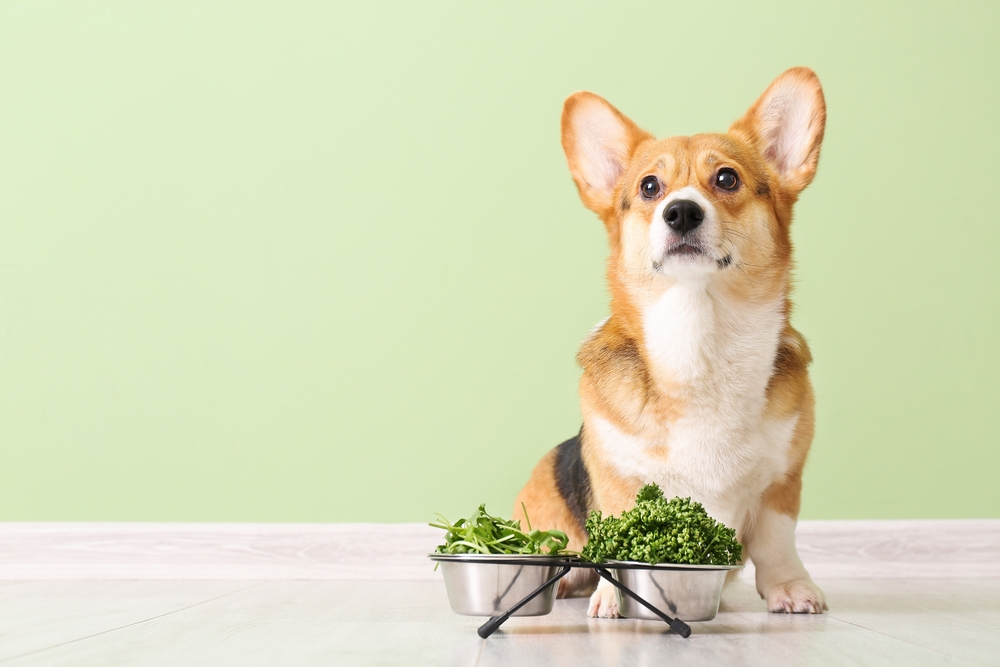
    Image “cute-corgi-dog-herbs-vegetables-near-20 34320018” also provided by Arslan via shutterstock and purchased license to use.




  • A Dog’s New Year’s Resolutions

    A Dog’s New Year’s Resolutions


    As you consider your goals for the New Year, take a minute to consider what your dog might want from you in 2024. As you fill in the calendar of a new year, please include your dog, or family of pets you care for, regarding their needs and how to include them in your daily life.

     A Dog’s New Year Resolution List might look something like this:

    (1). Take me for daily walks.  I adore the outdoors and opportunity to use my superpower sense of smell to “process” the world. It gives me great pleasure to diagnose the scents around the ground. Please don’t pull me along because you’re in a hurry.  Let me stop and sniff the bushes, light poles and fire hydrants that command my nosy attention. It may be the only activity for me today, so let’s make it count.

    (2). If we can’t go for a walk, can we play an indoor game instead? I like spending time with you, so let’s play hide and seek, toss some balls or squeaky toys around or teach me a new trick. New toys, entertainment puzzles or a treat-stuffed Kong will help keep me occupied when you’re not home and I’m alone.

    I would love it if I could go with you when you run errands.  I can’t stay in the car alone, but I hear Home Depot and many other dog-friendly stores open their doors to 4-legged patrons, so let me join you on those jaunts.

    (3). If you notice that I have bad breath, I may need a teeth cleaning. Hard chew bones might help detract the plaque and keep me gleefully occupied but brushing my teeth daily will help keep my canines clean and avoid losing them later in my life.

    (4). I don’t like going to the doctor’s office any more than you do yet monitoring my health with annual (or semi-annual) well exams should be on our calendar this year, especially if I’m 5 or older.  I’m aging faster than you are, so periodic check-ups, not just routine vaccinations, will allow me to enjoy your company longer if something exists that needs preemptive attention.

    (5). Please keep my coat clean and debris free.  Mats are uncomfortable and over-grown toenails make it harder for me to walk.  When you brush me, it’s like a massage!  Let’s do that often.

    (6). Make sure I have proper identification. I might discover accidental outdoor freedom and don’t want to get lost and not find my way home to you.

    (7). I appreciate that you let me sleep indoors and have provided a soft bed to call my own (sometimes in yours!). If you must travel without me, please choose a cage-free dog boarding option or a loving pet sitter to care for me in our home.

    (8). I need routine!  If something is upsetting you, I will comfort you.  If we both get caught up in a life-changing moment, please remember that I need to be comforted to.

    (9). Please feed me the highest quality dog food you can afford.  I appreciate that budget is a concern, yet that big feed bag with mystery ingredients isn’t the best buy for my long-term health. As I mature, I need dietary changes to coincide with my growing and changing needs.  I’ll do my best to enjoy the same food every day, yet variety is the spice of life (so I’ve heard).

    (10). If you rescued me, please know that I am truly grateful.  I may need some time to get past my past hurt.  Be patient and know that I want to attach again.  Do not detach from me during this transitional period nor give up on me, as others might have done before you and I met.

    We all need to feel wanted, protected and loved. Our human-animal bond is not only reciprocal in love and adoration, yet one of the best relationships we can have in its most simplistic form.

    Dogs are authentic and without pretense. To quote Josh Billings: “A dog is the only thing on earth that loves you more than he loves himself.”

    Resolve to make each day the best it can be for you and them.

    Hugs,

    Your Pet Pros at AoPP

    If your New Year resolution is to grow your pet sitting business, JOIN US as a member so we can help you achieve new heights! http://app.comeback2.host/join-us/

    photo attribution: Cole Keister on unsplash

  • Does your Dog Eat your Socks & Shoes?

    Does your Dog Eat your Socks & Shoes?

    why dogs eat socks
    You may have experienced this unique phenomenon when you turn around and your dog (or furry guest) has your underwear in his mouth! What’s the first thing you do? Laugh or begin the chase (which is always fun for a dog to play “keep away”)?

    Either way, they are getting a reaction out of you. So, if it isn’t an attention-getting maneuver, what else may be driving your dog to your socks, shoes and private garments? We know that a dog’s sense of smell is off the charts (compared to us mere mortals). Any smell of a particular object is a science experiment for a dog to perform. Your personal scent may be comforting to him and let’s face it, shoes, socks and other clothing items may be more pungent than we care to admit.

    Some dogs may consume non-food items due to a medical condition known as “PICA”.

    Pica may promote the digestion of not only fabric items, but also metal, plastic, cloth, garbage, rocks, paper, dirt, and feces*. NOTE: to be classified as PICA, the dog needs to EAT the item (not just chew on it).

    *The consumption of feces is a condition called “coprophagia” and more common with puppies until they mature. Nursing female dogs will eat their puppy’s feces after expulsion.

    PICA is most notably a compulsive disorder, yet it can also be the result of poor nutrition, extreme hunger or an illness.

    Boredom, anxiety and stress will always be a factor in a dog’s unwanted behavior. A dog with high energy that is not exercised enough may resort to destructive chewing for release. Some medications (steroids and anti-seizure) may enhance a dog’s appetite to insatiable levels that those socks might satisfy in a pinch.

    Let’s also remember that puppies will chew on anything as they explore their new world once weaned.  Every puppy owner expects to lose a shoe, furniture leg, a few rocks, etc. while rearing their young charge.  Fortunately, with diligence and extreme oversight, this doesn’t last long!

    If you notice abnormalities after ingestion of any foreign matter, immediately seek advice and physical diagnostics with a veterinarian.  A complete physical exam, x-rays, fecal and urine analysis, and lab work will be needed.

    Other PICA symptoms can include:
    • Decreased appetite or anorexia.
    • Pawing at the mouth/face
    • Gagging or retching
    • Bloated stomach
    • Straining to launch a BM)
    • Dark, black tarry stool
    • Excessive drooling
    • Coughing
    • Blue/purple mucous in the mouth
    • Visible distress or abnormal behavior

    A professional pet sitter and resolute dog owner will always be hyper aware of a change in their dog’s behavior while keeping a watchful eye on them!

    For more information on PICA, read this great article by Barri J. Morrison, DVM for PetMed (4/3/23):  https://www.petmd.com/dog/conditions/behavioral/pica-dogs

    Another great source for further information on this subject: https://dogscatspets.org/dogs/dog-ate-sock/my-dog-ate-a-sock-symptoms-will-he-be-okay-and-what-to-do/

    We have a ton of resources for our MEMBERS to devour! Join us as a member @ http://app.comeback2.host/join-us/

    Photo attribution (dog eating a sock): dogscatspets.org

    Photo of Labrador munching on underwear:  actual client


  • What Breed is that Dog?

    What Breed is that Dog?


    While the AKC updates the growing and diverse canine community of unique breed mixes, (200+ registered breeds to date), has anyone else noticed there is a bourgeoning group of “designer dogs” that are now the rage?

    Revered for its intelligence, training ease and hypo-allergenic benefits, the Poodle is now cross bred to create the Labradoodle, Goldendoodle, Sheep-A-Doo, Husky-Doo, Pom-Poo, Schnoodle and the (older) lines of Cock-A-Poo, Malti-Poo, and Yorkie-Poo.

    Then we have Cheeks (Chihuahua-Pekinese), Puggles (Pug-Beagle), Pom-Chi’s (Pomeranian- Chihuahua), Shorkies (Shih Tzu-Yorkie) and Chiweenie’s (Chihuahua/Dachshund) just to name a few. These categories of 2 breeds that have been specifically mated are known as “cross breeds”. That is, two separate purebreds went on a date and had puppies. 🙂

    As a pet pro, it’s always helpful to look up a specific breed that you will be caring for, to get a hint as to the dog’s disposition and general behavioral tendencies. Be careful not to judge a book by its cover, however! An advance meet and greet is always a must.

    There’s much to be said about wanting a specific breed for characteristics that match the intended owner’s desires and lifestyle; by combining the best traits of each.

    Yet…how many shelter pets have you met, owned or cared for that was a mixed bag of two or more breeds that were some of the best dogs ever?

    Current estimates suggest that 53% of household dogs today are mixed breeds[i], so let’s give it up for the mutt!

    According to Dogtime.com: “Choosing a mutt is a lot like dating: you may meet a few dogs that seem interesting, and then fall in love with one for reasons that make sense only to you. (Choosing a purebred, on the other hand, is a little like saying, “I only date blondes.” You can still find a love match, but you may end up overlooking someone who’s even more perfect for you.) The truth is heritage matters very little. You’ll get along well with your dog because you both love to run, for instance, not because a piece of paper says he comes from a long line of dogs originating on the coast of Croatia.”

    Whether you own or care for a traditional purebred, designer- breed or home-grown mutt, we celebrate the fact that you wrap your arms around all dogs and wish you all the joy and happiness that dogs provide.

    Hugs from your Pet Pros at AoPP!

    Photo by Jenny Marvin on unsplash

    [i]Stanley Coren, PhD, DSc, FRSC, Canine Corner for Psychology Today (6/28/11)

  • Pet Sitter Tips to curb Counter-Surfing Dogs

    Pet Sitter Tips to curb Counter-Surfing Dogs

    For Home-Style pet boarding, you have undoubtedly experienced a few canine counter surfers who want what you’re having!

    Most dogs can’t resist the lure of something yummy left on the kitchen counter. If given the opportunity to nab it, you bet it’s a robbery about to happen.  Obviously, if you know your furry guests are prone to thievery, you clear the countertops of every bread crumb before you exit the kitchen. A pet sitter’s job is to ensure dogs stick to their diet which doesn’t include the human treats in the kitchen, not supplied by their owners.

    Yet if you are boarding one or more dogs or pet sitting for a dog in a household with family members who aren’t as diligent as you are, it may be harder to control.  This is especially important when toxic food items are inadvertently made available. For a complete list of people foods that are toxic to pets, visit: https://www.aspca.org/pet-care/animal-poison-control/people-foods-avoid-feeding-your-pets

    I will never forget the antics of a favorite house guest “Zoey”. I knew in advance that Zoey had sneaky skills. A beautiful English Mastiff with the height to easily reach countertops coupled with a keen interest to explore pantry doors, counters and cupboards. She would wait until no one was looking then help herself to food items of desire.

    Her Mom dropped her off for boarding after she consumed an Easter basket of chocolates- wrappers and all! For several days, her outdoor “deposits” included a rainbow of foil. Given her girth, she digested her spoils without issue.  A smaller dog, however, would have been rushed to the vet.

    To curb this “Zoey-like” habit with furry house guests, a little pet sitter ingenuity is required. A quick and easy solution is to install a baby gate at the kitchen entrance every time you are cooking or serving family meals. A simple spring-loaded gate should be sufficient and avoid drilling holes in your walls.

    If you have the time for a little training, leave something tempting on the countertop, slightly out of nose reach, and hide around the corner. Using either a spy cam device or hand-held mirror, wait and watch for your dog to investigate, then rush in quickly with the command “leave it!” or “ah ah ah” to interrupt this behavior. If practiced over time, they will eventually get the point and “leave it” alone.

    You can also try to redirect the dog’s behavior.  Give them a food-stuffed toy or chew bone in another room of the home to keep them busy while you’re cooking in the kitchen. Chew bones are best served when there is only one dog in the other room. With multiple dogs, chew bones can incite a fight, so it is best to avoid food aggression. This includes keeping them separated during mealtimes.

    We’d love to hear your “Zoey” stories!  Comment below or share as a post on our social pages!

    As always, be safe and happy in your pet sitting journey. We’re here to help you every step of the way! Join us @ http://app.comeback2.host/join-us/

    Hugs,

    Tori and AoPP pet pros

    photo credit: dfordog.co.uk


  • Moving with Pets

    Moving with Pets

    Whether moving across town or out of state, it is an exhausting proceMoving with dogs and catsss for any family, including the furry children. Dogs and cats are creatures of habit and thrive on predictable routines. The frenzied activity of a household relocation can cause as much stress for them as their owners, yet manageable with some extra planning. Pet sitters can help their clients by sharing these tips and offering special (off-site) pet care for clients moving locally. Pet Pro Tip: partner with local real estate agents to let them know you offer pet care services for their clients on the move.



    Before any move, researching local ordinances and homeowner’s association by-laws that may restrict certain dog breeds OR the number of household pets allowed is critical.  For multi-pet families, it’s important to know in advance what to expect before signing the housing or rental contract! Discriminatory breed bans are particularly prevalent when it comes to “bully breeds” with an unfair bias against Pit bulls. Breed stereotypes can affect homeowner’s insurance rates, rental property availability or restrictions against ownership.

    If moving cross country, pet owners should consider climate changes that might require additional pet protocols for flea, tick, heartworm and Leptospirosis treatment. Leptospirosis is more common in warm climates and those areas with high annual rainfall. Many dog owners living in desert climates enlist professional snake-training for their dogs as an added precaution.

    Maintain Pet Routines with Focus on Safety


    It’s important to maintain a pet’s daily routines as much as possible, especially during the packing process.  All those boxes and disappearing items will be unsettling for them.  Leave their pet beds, bowls and toys for last and make sure they are the first items to be unpacked. Cats love cardboard boxes, which is a bonus for cat owners.  Let the cat play with an empty box or two, and perhaps add a special treat inside to make those boxes extra fun for them.

    If a dog or cat is not used to a carrier, a slow introduction is necessary. Leave the crate/carrier out with the door open. Add a favorite toy or treat inside so they can explore it slowly and on their terms. You can also serve their meals inside the crate, moving the food further back each time.

    Moving day can be quite traumatic for both owner and pet. The commotion of movers may prompt a “fight or flight” response, and an open front door is not only likely, but an invitation for a dog or cat to escape. As an added precaution, create a safe, quiet and secure room for them. For highly anxious dogs or cats, calming aids, supplements or medications may be needed. This should be discussed with the family veterinarian.

    Find A Local Veterinarian upon arrival!


    Once settled, pet owners need to find a local Veterinarian and emergency 24/7 vet facility near their new home.   Tips to finding a good vet include word of mouth, neighbors, rescue groups and breed-specific organizations. Searching on Yelp and Google can also be helpful. Ask about care costs and if a payment plan is available. A pet insurance plan should also be considered as part of a pet’s wellness program, for all life stages. Keeping vaccination records in an organized file to share with the new vet is always a good practice, yet often overlooked and easily lost in a move.

    A family move brings many new and different changes that can be both exciting and daunting at the same time. Some pets may take a detour on potty or crate training when in a new place, as they adjust.

    Getting them used to the new house, neighborhood, environmental scenery and noises can be viewed as an adventure if not an invitation to get back to basics with dog training and using high value treats as rewards during acclimation. Positive reinforcement with calming tones and praise will help pets adjust during the move and after settling into new digs.

    Hugs,

    Your Pet Pros @ AoPP


  • The Yin and Yang of Spay & Neuter

    The Yin and Yang of Spay & Neuter

         As a professional pet sitter, it’s important to understand spay and neuter issues to assess potential complications for your pet sitting business.  If you are boarding dogs in your home or pet sitting a young dog still intact, details to consider are included in this blog. Nature at its finest…are you prepared?

    Of course, the decision to spay or neuter a pet is entirely up to the owner. Opinions are mixed as to the ideal age to spay or neuter a dog.  Rescue groups and animal shelters spay and neuter as quickly as possible to avoid unwanted litters.  Some veterinarians, most breeders and individual owners may lean toward delaying these procedures past the first 6 months of age to avoid potential health risks later.

         Risks include joint disorders (hip or elbow dysplasia) and various cancers, such as lymphoma, mast cell tumor and osteosarcoma.

         Spaying or neutering within the first 6 months of age delays the closure of growth plates that control bone development.  Subsequently, the longer the wait period the more likely optimal growth in height and conformation will occur.

    However, on the other side of this debate (for female dogs) may increase the risk of “pyometra”, a dreadful uterus infection and mammary cancer. For intact males, there is potentially added risk of testicular cancer.

    X-rays will show when growth plates are fully closed, which is a helpful tool to determine when it’s best to schedule surgery.

    Timing of surgery may also be influenced by breed.

    According to researchers at the University of California, Davis some dog breeds have a higher risk of developing certain cancers and joint diseases if neutered or spayed within the first year.

    They analyzed 15 years of data from thousands of dogs examined yearly. The results are extremely mixed, based on their professional review of 35 different dog breeds.

    In many cases these potential health concerns were not necessarily affected by the dog’s age at neutering, but more likely due to body size. Fundamentally, smaller dogs are less prone to joint disorders as they mature as early as six to nine months of age, whereas bigger breeds take longer.

    Interestingly enough, it was discovered that Great Danes and Irish Wolfhounds, despite their “largesse”, did not show an increased risk when neutered at various ages. Who would’ve thunk?

    Benjamin Hart, distinguished professor emeritus at the UC Davis School of Veterinary Medicine states: “There is a huge disparity among different breeds…there is no “one size fits all” when it comes to health risks and the age at which a dog is neutered. Some breeds developed problems, others didn’t. Some may have developed joint disorders but not cancer or the other way around.”

    NOTE: Diet and nutrition were not factors of this study’s assessment, yet certainly begs to be considered when studying the incidence of cancer in our companion animals.

    Sexually-driven Behaviors of Intact Male Dogs

          Male dogs tend to reach sexual maturity between the ages of five and twelve months old. During this timeframe, you can expect hormonally-driven undesirable behaviors to unveil:


    • Increased frustration released by digging, scratching, and chewing.
    • Restlessness and inability to settle down.
    • Flight impulses including fence jumping and door dashing.
    • Barking, lunging, growling, snapping, biting and fighting with other male dogs.
    • Lack of cooperation and noncompliant behavior.
    • Excessive pulling and dragging during walking; intense sniffing and licking female urine.
    • Extra interest in the genital area and excessive grooming.
    • Exhibiting sexual arousal when petted or given attention.
    • Mounting people, animals and/or objects (or thin air).
    • Excessive urine marking, both indoors and outdoors.
    • Frustrated, excessive barking.

    Due to these problematic behaviors, commercial facilities will deny entrance to an intact male past the age of 6 months…and pet sitters should strongly consider the added complications as well!

    Boarding a female dog that isn’t spayed and likely to come into heat on your watch is a risk most pet sitters should avoid.

    For pet owners who plan to travel without their pets during this “wait” period, its best to secure pet accommodations well in advance or delay travel until the deed is done. For professional pet sitters, it’s essential to consider waiting to provide service until these potential complications have passed.

    Hugs from your Pet Pro Team @ AoPP!

    photograph credit: Taylor Sondgeroth on Unsplash

    Resources for this article:

    https://www.ucdavis.edu/news/when-should-you-neuter-your-dog-avoid-health-risks

    https://www.frontiersin.org/articles/10.3389/fvets.2020.00388/full

    https://dogdiscoveries.com/behavior/behaviors-of-intact-male-dogs

    https://www.akc.org/expert-advice/vets-corner/neutering-spaying-right-age-dog/


  • The Love Language spoken by Dogs

    The Love Language spoken by Dogs


    The Love Language Between us and our Dogs


    If you own or pet sit for dogs, you know they possess marvelous communication skills. Apart from their vocalization and understanding of our words and commands, dog body language involves their posture, tails, head and eye gaze and using their paws to emphasize their point. Dogs go “all in” with their all! A professional pet sitter knows how to interpret these signals in order to properly respond.

    Have you noticed when you stop petting a dog how they might “paw” you for more? I love the lovers who can’t get enough petting and stroking; especially when at the computer keyboard with a cup of coffee in one hand and their head gets involved to say, “keep going”.  The coffee flies.

    Roll Over is more than a Trick!

    Rolling over for a belly rub is a sign of relaxed contentment and to garner love and attention. It’s also a sign of trust in you. Done in the presence of other dogs, it may be a sign of respect to the higher-ranking dog in the pack.

    The Tail is a good Tell

    A low to medium tail position that is either still or wagging is a dog’s “tell” that he is relaxed and happy. If it’s tucked under, this dog is expressing fear, deference or appeasement. When the tail goes high and fast, this could be excitement, tension, or aggression. The latter requires big-picture context in order to decipher what’s being communicated. I enjoy the helicopter tail that is accompanied by a wiggling body, soft eyes and excited whimpers that truly says, “I love you!”

    Eye Contact and Gaze

    dog eye gaze

    Studies have shown that dogs are really good at reading our moods, via eye gazing. Dogs follow our gaze to determine if what we’re saying or doing is directed at them. Additionally, when we gaze back, our levels of oxytocin (the “cuddle chemical”) are increased in both dog and owner (and pet sitter). It might be that those “puppy dog” looks were developed by dogs to get just what they want from us.

    For those dogs that look away, they are simply being polite and deferential. They do not wish to be confrontational so avoid your eye gaze. Some dogs will perceive a prolonged eye stare as a threat, so always be careful when first meeting a dog “eye to eye”.

    Dog Speak

    Equally as fascinating as a dog’s body language cues, is their ability to communicate verbally. Not only are dogs using a range of vocal signals (whining, barking, baying -hello Beagle- but in some cases, their own unique sounds (one I’ve heard yet can’t fully describe, sounds like “row, row, row”).

    Not only can they communicate verbally with other dogs, knowing instinctively how to interpret the other dogs’ bark, they understand our words. Their cognitive abilities go well beyond their learned response to training commands.

    Dog Cognition

    Dogs have proven their ability to understand what humans are barking about. Every dog knows what the word walk means. Ex: when we ask them “wanna go for a walk?” while also grabbing visual aids such as a leash, tennis shoes and even poo bags, these verbal and non-verbal signals from us sends them into excited oblivion.

    In the book “The Genius of Dogs”, by Brian Hare & Vanessa Woods, Brian talks about his own dog Oreo. Brian’s Dad decided it would be a great idea to get Oreo to fetch the Sunday paper from their long, steep driveway. His father simply brought Oreo to the end of the driveway, pointed at the paper and said, “fetch paper”. When Oreo complied, he was praised. Within a week, Dad was standing at the top of the driveway, asking Oreo to “fetch paper” and Oreo knew what was wanted.

    Not only did Oreo understand the words, but also the initial gesture of pointing at the paper and applying cognitive inference as well. Dr. Hare’s early examination of Oreo’s cognitive abilities has launched a full-scale institute of Canine Cognition Studies known as DOGNITION. Learn more @ https://www.dognition.com/ for fun, games and enlightenment.

    To quote Dr. Hare: “Relative to other animals, it is the ability of dogs to understand human communication that is truly remarkable. Some dogs have the ability to learn hundreds of names for objects. They learn these names extremely rapidly through an inferential process of exclusion. They also spontaneously understand the category to which different objects belong. Some dogs even show understanding of the symbolic nature of human object labels. Dogs may truly understand words.”

    I am not an expert nor possess any degrees in anthropological studies. I have simply had the pleasure of hosting and personally observing 1000’s of dogs in my home over the past 14 years in my cage-free boarding business: https://www.doolittlesdoghouse.com Yes, it is truly possible to “talk to the animals” just like Dr. Dolittle’s character. Dogs understand what we are saying and doing and lovingly reciprocate in their own unique and wonderful ways.

    Hugs and love,

    Tori

  • Easter is a Bunnanza for Rabbit Acquistions

    Easter is a Bunnanza for Rabbit Acquistions


    Because bunnies are oh-so-cute, they are often given as gifts at Easter. Sadly, shelter workers report they are the most returned pet after Easter.
    Those cute and cuddly baby bunnies sexually mature at 4 months and adolescent behavior follows: biting, spraying, and not wanting to be held.

    Rabbits need to be spayed or neutered and as they get older, want to be held and carried less. They are most active at dawn and dusk, so prefer to sleep during the day.  This shortens the window of companionship time together.

    Bunnies are susceptible to various illnesses, bacterial infections (signs: runny eyes, nose, increased sneezing, wheezing), and even bladder stones (straining, bloody urine, crying while in litter box). The last is the most serious and requires immediate surgery.

    A rabbit needs to be kept indoors. The cage bottom needs to be covered with thick newspaper, sea grass mats, or cushy straw to prevent hock sores.

    The House Rabbit Society offers beyond-fuzzy advice for prospective bunny owners:

    • A rabbit as an Easter gift is not a good idea – chocolate bunnies are best!
    • Never buy a rabbit (adopt instead!)
    • Do your homework first to learn about rabbits as pets.
    • When you’re ready for an 8–12-year commitment, adopt from a local rescue/shelter.

    Rabbits are wonderful companions, but they’re not for everyone. If you want to learn more about caring for a rabbit, visit their website: https://rabbit.org. Fostering a rabbit first is a great way to experience life with a rabbit before making a permanent commitment.

    How many rabbits have you encountered and cared for in your pet sitting profession? Reply below or send an email to share your “bunny” experiences @ info@app.comeback2.host or http://app.comeback2.host/contact-us/

    Hoppy Easter and hugs from your Pet Pro Team @ AoPP!

    We believe that rabbits are intelligent and social beings. House Rabbit Society, a 501(c)(3) nonprofit organization, is the nation’s largest rabbit welfare group. Their aim is to improve the lives of domestic rabbits through education, awareness, and rescue.


  • The Importance of Time Management and Zen for Successful Pet Sitters

    The Importance of Time Management and Zen for Successful Pet Sitters

    Pet Parents are traveling more than ever, so pet-sitting demands mount in gleeful yet more stress-inducing ways. To maintain an effective work-life balance, consider how to best manage your time and tasks, not only during this busy season but throughout the year.

    Pet sitters need self care too!Time is your most valuable and scarcest resource, with 1440 minutes a day to accomplish your personal and professional goals. Use your early morning to strengthen your heart, mind and body. Buddhist Monks keep their eyes closed and breathe first before getting out of bed! They reflect on the gift of another day before they start the day.



    Each morning, start with the most important task, break it down and nail it. The Pareto principle, also known as the 80-20 rule, correlates to 80% of results come from 20% of your activity. Say no to everything that doesn’t meet your immediate goals. Everything you say yes to means you are saying no to something else.

    Carry a notebook with you and jot down all your positive thoughts that are captured in your mind throughout the day. Your mind will process and organize your thoughts for you naturally.

    Control your inbox and shut off notifications (those cell phone “pings” throughout the day are distractions). Process your emails 2-3 x day, yet in controlled fashion and based on priority.


    pet sitters run all day!Find creative ways to avoid procrastination. EX: you’ve been thinking about an exercise program yet work demands keep putting that jog on hold. Solution: Put tennis shoes next to the bed and go to sleep in a t-shirt and jogging shorts!



    Establish Focus Days, Buffer Days and Free Days. Focus days are the Pareto of your week, with the first 2 hours of Focus Days centered on your Most Important Tasks. Buffer Days are the “admin” days to catch up on phone calls, texts, emails, blogs, client newsletters, payroll etc. Free Days are the days you don’t work! Always take time for yourself and close the office. Staff
    should not be expected to work 7 days a week either.

    Set an outgoing message on your office phone that says: “Thank you for calling (your name/company name). We’re sorry to have missed you. Please leave a detailed message so we can better assist you. The office is closed after 5:00 and on weekends. If you have a last-minute FUR11 after normal work hours, please call or text (name) on his/her cell phone (#)”.

    This simple message sets client expectations to (a). Respect a normal work week regimen and (b). Not to expect a return call on a Saturday or Sunday. You are also letting them know that urgent after-hour needs will be met and managed.


    Pet sitters need to relax between dog walksTake lots of breaks during the day! Sprint, rest, sprint, rest…Hard work and relentless focus on your dreams and goals is admirable. Just breathe and take breaks to avoid burnout.

    Many successful business people use “To-Do” lists to organize their day, while others rely on calendars. Choose what works best for you. To-Do List Apps are available as an alternative to white-paper lists with a little more functionality.
    For tech-lovers who want to download an app for organizing your day, take a peek at our recommendations based on great reviews:

    Any.Do (“must have” per NY times and WSJ)

    Sorted3 (everything in one place)

    TickTick (has a Habit Tracker feature that includes time slots for meditation)

    Trello (this one includes team management functions).

    The Association of Pet Professionals cares about its members. We are here to help you succeed as a professional Pet Sitter and are as dedicated to you as you are to your clients and their companion animals.

    Let’s travel together with joy and peace.